
A Message from Child Care Aware of Virginia

Babies spend a large amount of their early lives asleep – it’s crucial to ensure that they’re sleeping safely! Sudden Infant Death Syndrome (SIDS) and other sleep-related accidents account for more than 1 out of every 3 unexplained infant deaths in the United States. October is Safe Sleep Awareness Month, a time when we highlight the importance of safe sleep practices that can significantly reduce the risk of SIDS and prevent more of these tragedies from occurring. While there is no sure way to prevent SIDS, there are things we can do to keep our babies safe while they sleep. Getting good sleep when you have small children can be a challenge. But it’s important to do everything you can to keep your baby safe. The benefits of moving a sleeping baby to a safe crib outweigh the risks of what can happen if you don’t. Read on for tips to keep your baby safe and sound!


What is SIDS?
Sudden Infant Death Syndrome (SIDS) is the term used to describe the sudden death of a baby younger than one year old that doesn’t have a known cause, even after a full investigation. Despite years of research and education, SIDS remains the leading cause of death among infants between one month and one year old. This devastating tragedy often occurs without any warning signs or symptoms, though certain babies may be at more risk than others. Managing your baby’s sleep environment, parental behaviors, and reducing preventable risks may help better protect your baby.
Sleep-Related Deaths
Sleep itself does not cause SIDS – a baby can die from causes other than SIDS. Other risks include suffocation, strangulation, and asphyxiation. Suffocation can occur when the infant’s airway becomes blocked by soft bedding, pillows, or other loose, soft items in the crib. Strangulation or entrapment can happen if the baby’s sleep environment is not properly set up or near items they can get tangled in or trapped between. These types of deaths are different from SIDS, but they are a type of Sudden Unexpected Infant Death (SUID). Visit the link below for answers to common questions about SIDS.
Other SIDS Risk Factors
Though researchers still do not know exactly what causes SIDS, they do have a few theories and have identified some risk factors that may increase the likelihood of SIDS. Some risk factors, including many related to the sleep environment, can be changed to lower a baby’s risk. Other risk factors cannot be changed. For example, babies who were born prematurely, with a low birth weight, or who were exposed to alcohol or drugs during pregnancy were at increased risk of SIDS. Click here to find out why some babies may be at higher risk of SIDS, and click the link to learn more about the currently known risk factors.


Co-sleeping, Bed-sharing, and Room Sharing
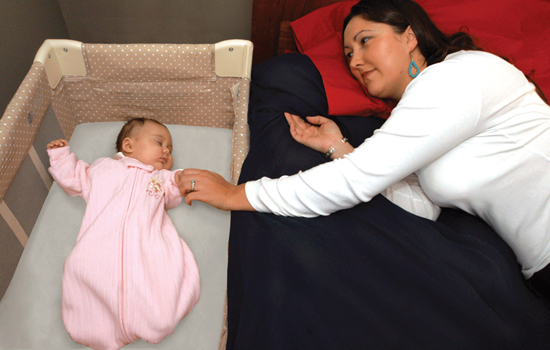
Co-sleeping, bed-sharing, and room-sharing are all common practices when it comes to infants and sleep arrangements. These terms are often used interchangeably, but they refer to different things. Co-sleeping generally refers to parents and babies sharing the same sleeping space, whether it be a bed or a room. Bed-sharing specifically involves the parent and child sharing the same bed or sleeping surface, while room-sharing means the child has their own separate sleeping space in the same room as the parent. The American Academy of Pediatrics (AAP) strongly advises against bed-sharing but strongly recommends room-sharing for the first year. While bed-sharing is a common practice in many cultures around the world, most Western beds are not set up for safe infant sleep. Click here to learn more about the risks of bed-sharing, and see these Parents.com articles to help make the process easier.


Back to Sleep…
One of the most effective actions that parents or caregivers can take to reduce the risk of SIDS is to always place baby on their back to sleep, for all naps and at night. Stomach sleeping increases the risk of overheating and breathing in exhaled air, while side sleeping is unstable and can cause baby to accidentally roll over on their stomach. Once your baby can roll from back to stomach and stomach to back on their own, you can leave them in the position they choose after starting sleep on their back. If they can only roll one way on their own, you should reposition them on their back if they roll onto their stomach during sleep. Visit What to Expect for advice on getting your baby to sleep on their back.
…Tummy to Play
Although tummy time does not directly reduce the risk of SIDS, it is an important way to help your baby grow and develop. Tummy time aids in the development of their head, neck, and shoulder muscles, which are crucial for achieving important milestones like holding their heads up, rolling over, and eventually crawling. Most babies can start tummy time sessions a day or two after they are born, starting with a few short sessions each day and increasing the amount of time as they get older. Tummy time also helps prevent flat spots on the head and provides opportunities for babies to explore and interact with the world in a new way. Pathways put together a comprehensive guide to tummy time and its benefits – visit them below!


Why do babies need a firm mattress?
Your baby’s crib mattress may seem too firm for you, but that’s how it’s supposed to be! Babies need a firm surface to sleep on to ensure their spines are properly supported and prevent them from sinking into the mattress, which may restrict their movement or breathing. Studies have shown that as many as one-third of babies who die from SIDS each year may have been sleeping on top of soft surfaces like pillows, comforters, or sheepskins. Softer surfaces also increase the risk of suffocation if the baby were to roll onto their stomach. Visit the National Institute of Child Health and Human Development for more information.
What about babies with reflux?
Parents may be concerned that their baby might vomit and choke while sleeping on their back, but that’s a total myth! Even babies with GERD or reflux are safer sleeping on their backs. Babies have a naturally occurring gag reflex that protects their airways and ensures that any solid or liquid substances are expelled to prevent choking. Back sleeping is safer because it puts the trachea on top of the esophagus, so if baby does spit up, it will run back into the stomach and not into the lungs. Crib wedges or elevating the head of the crib is unnecessary and may cause baby to slide to the foot of the crib and in an unsafe position. Visit Healthline for more tips for babies with reflux.
Safe Sleep for Babies Act

The Safe Sleep Act for Babies was signed into law by President Biden and aims to protect the well-being of infants and children by preventing unsafe sleep products and practices. It banned the sale of inclined sleepers and crib bumper pads, two dangerous products that have been linked to more than 200 infant deaths. You may not find these items new on Amazon, but you can still find them secondhand. Always be sure to check the Consumer Product Safety Commission website to see whether your baby’s crib was recalled. What to Expect put together a great guide to help you understand what the latest sleep guidelines actually mean – see more below!

Car Seats – Great for Road Trips, Not Naps
While a car seat is the safest place for your child in the car, it’s primary purpose is to keep children safe in a crash. That’s why most car seats are inclined, even though we know that lying flat is the safest way to sleep. Sleeping at an incline, like in a car seat or stroller, can cause the baby’s heavy head to fall forward into a chin-to-chest posture. This posture can block the baby’s airway, causing positional asphyxia. The scary part is that a baby sleeping peacefully and a baby experiencing positional asphyxia can look the same, even to the most watchful eye. If your baby falls asleep while you’re on the go, make sure to move them to a safe space as soon as possible. For longer trips, make sure you have a properly installed car seat and follow the 2-Hour Rule – no more than 2 hours in a car seat within a 24 hour time period. Visit our car seat safety website and view Safe in the Seat’s article below for more!


Other ways to reduce your baby’s risk:
For more safe sleep and SIDS prevention:
As an inaugural member of the Cribs for Kids Program Advisory Board, Sarah Vaughan contributes expertise alongside a diverse group of infant safe sleep specialists and advocates. Our role involves collaborating to create impactful educational resources and outreach strategies aimed at reducing infant mortality from unsafe sleep practices. Visit Cribs for Kids to learn more!
Stay informed – join our mailing list today!
Whether you are a parent, child care provider, or interested community member, we have a variety of valuable resources to share with you. Sign up today to receive updates on early childhood education in Virginia!