Secure Your Firearms. Secure Their Futures.

Winter keeps us inside more, making it the perfect time to revisit important family safety conversations. Just like we discuss internet safety and strangers, gun safety deserves our attention too. Yes, it can feel like a heavy topic, but recent statistics show this conversation has never been more important or more relevant for American families. We can focus on practical steps and educate ourselves to keep our kids safe, both at home and in the community. This month, we’ll explore the issue and share resources to help you protect your children.


The Stakes

According to the CDC, guns are now the leading cause of death for American children and teens, surpassing car accidents, drug overdoses, and even cancer. The numbers are stark: 4.6 million U.S. children live in homes with at least one loaded and unlocked firearms. In 2024, accidental shootings by children claimed 136 young lives and injured 229 others nationally. In Virginia alone, gun violence takes about 1,200 lives yearly, including 119 children and teens. These aren’t just statistics – they’re preventable tragedies. Simple steps like proper gun storage and community education could help protect our kids and communities. Visit EveryStat to learn more about the statistics in Virginia.

The Reality Check

Kids are naturally curious and often find things adults try to hide – including guns. Most children in homes with firearms know exactly where they’re kept, even when parents think otherwise. What makes this especially dangerous is that up to 43% of households store their guns unloaded, creating an immediate risk for curious children. Those traditional “hiding spots” – the top shelf of a closet, under the bed, in a dresser drawer – are often the first places children look. While some parents believe their children can tell the difference between real and toy guns, 16% of unintentional deaths occurred when a child mistook a real gun for a toy. Learn more gun safety myths, facts, and tips below.


Essential Storage Guidelines

Safe gun storage saves lives. Hiding the guns is not enough. Proper firearm storage requires three essential steps:

  • Locked: Store firearms in a heavy-duty gun safe or lockbox that can’t be easily moved or tampered with.
  • Unloaded: Always store firearms unloaded. Lock ammunition separately in a secure container, like an ammo can or lockable cabinet, inaccessible to children.
  • Out of Reach: Ensure all storage units, keys, and access codes are completely out of children’s reach.

Research shows that proper storage practices can reduce the risk of unauthorized access by up to 78%. While accessibility matters, safety comes first – guns should only be available to authorized users when needed. Children should never have unsupervised access to guns. Review and upgrade your storage methods regularly to maintain the highest level of protection.

Johns Hopkins Bloomberg School of Public Health outlined the importance of safe and secure firearm storage. See the article below. Visit the CCAoVA Gun Safety website for more gun safety tips.


Gun Laws in VA

Virginia has the 15th strongest gun laws in the nation, according to Everytown for Gun Safety. While Virginia law doesn’t broadly mandate safe firearm storage, it does prohibit leaving loaded firearms where children under 14 can access them and bans minors under 18 from possessing handguns or assault weapons except for supervised activities like hunting. While Virginia sets no minimum age for rifle ownership, federal restrictions apply. All firearms are prohibited on school grounds, including private and religious schools, regardless of concealed carry permits. For a comprehensive overview of Virginia’s gun laws, visit the Giffords Law Center.

Cole’s Law

Although Virginia law doesn’t broadly mandate safe gun storage in all settings, Cole’s Law requires family day home providers to keep all firearms unloaded and locked away during child care hours, with ammunition stored separately in another locked container. Cole’s Law, enacted in 2020, was named for Cole James Clark, a four-year-old who died from an accidental self-inflicted gunshot wound after finding a loaded gun while napping at his child care provider’s home. No child should be exposed to such danger. Visit our website to learn more about Cole James Clark and this important law, and click here to donate to our Gun Safety Campaign


Talking to Your Kids About Gun Safety

There’s no single “right age” to begin discussing gun safety with your children. Start the conversations when kids first show awareness of or interest in firearms. While these conversations matter, a child might still explore a gun if they find one, despite well-intentioned warnings. Secure gun storage is always the most important way to prevent accidents.

Keep it simple with young children: guns aren’t toys and can hurt people. Teach them this basic rule: “If you see a gun, don’t touch it. Walk away and tell a grown-up immediately.” With older kids, discuss real-world consequences and how media often misrepresents gun use.

The core message for all ages is clear – never touch a gun you find, never assume it’s a toy, always assume it’s loaded, and tell an adult immediately. Make this an ongoing conversation, not a one-time talk. Treat it like any other safety topic, such as crossing the street or dealing with strangers.

Remember, while teaching kids about gun safety is essential, nothing replaces proper gun storage. Keep having these conversations as your children grow, and make sure they know they can always come to you with questions or concerns. For additional guidance, see this helpful guide from Be Smart, or visit Project ChildSafe’s website in the button below.


Beyond Your Home

Your child might encounter firearms outside your home, even if you don’t own any. 4.6 million children live in homes with unsecured guns. Make it a habit to ask about firearms before playdates, just like you’d ask about allergies or pool safety. A simple, “Is there an unsecured firearm in your home?” could save lives. While it might feel uncomfortable at first, remember that your child’s safety matters more than a moment of awkwardness. Given that even toddlers can be strong enough to pull a trigger, it’s important to have this conversation with anyone who will be responsible for your child’s care. For guidance on having these conversations, check out the resources below.

Evolving Safety

Safety needs change as families grow. What protected your toddler won’t work for your teen. Check and update your safety measures regularly, especially if you’re teaching firearm handling – familiarity can breed carelessness.

Mental health matters too. Having a gun at home triples suicide risk, particularly for teenagers. Keep the conversation open about mental health, and creative a supportive environment. If you or someone you know is struggling with suicidal thoughts, please call or text 988 for immediate help, or visit 988lifeline.org. See the resources below for more on mental health, gun safety, and suicide prevention.


The Impacts of Community Violence

When children encounter news about shootings and violence in their communities, they need trusted adults to help them make sense of these events. Whether through news, social media, or friends, children are often already aware of these situations and may have questions or fears they need to address.

Children might respond to news of violence in different ways – some become anxious or withdrawn, while others show anger or confusion. Parents can help by providing simple, age-appropriate information and focusing on practical safety measures. Watch for signs of distress like changes in sleep patterns, increased clinginess, or trouble concentrating.

Remember to stay calm when discussing these topics with children, as they take their cues from adults. Limit exposure to news coverage and focus on constructive conversations about safety and support. The Child Mind Institute offers valuable advice for how to talk to kids about gun violence and other traumatic events. For additional resources on helping children cope with community violence, visit Sesame Workshop.


Additional Resources

Knowledge and support are essential tools in promoting gun safety. Below is a curated list of organizations, hotlines, and resources to help you protect your family and community:

24/7 Crisis Support

Educational Resources & Safety Programs

Virginia Specific Resources

Safe Storage Solutions

Remember, the most effective safety measures combine proper storage, ongoing education, and open communication. For immediate assistance with gun safety or storage concerns, contact your local law enforcement agency’s non-emergency number or visit Project ChildSafe’s partner locator to find the nearest location offering free safety kits. 


Share the Message

Gun safety affects everyone in our community, not just families with children. Start conversations with neighbors about responsible gun ownership and safe storage. Share resources from trusted organizations like Project ChildSafe, which provides free safety kits and educational materials. Consider organizing community events or presentations about gun safety with the help of organizations like Be SMART for Kids, or use social media to spread accurate information. If you own firearms, lead by example – your commitment to safety can inspire others to follow suit. Learn more about getting involved at the CCAoVA Gun Safety website. 

Quality Care Matters

At Child Care Aware of Virginia, we believe that every family deserves access to affordable, high-quality child care. Quality child care isn’t just a service – it’s essential for children’s safety, well-being, and development. We work to create safe, nurturing environments where children can thrive, including advocating for important safety measures like Cole’s Law, which requires secure gun storage in family day homes. Want to learn more? Take our free course, “Understanding Child Care in Virginia: Why Quality Care Matters.” Need help finding quality care? Our Referral Specialist is ready to provide free referrals – just click below!


Stay informed – join our mailing list today!

Whether you are a parent, child care provider, or interested community member, we have a variety of valuable resources to share with you. Sign up today to receive updates on early childhood education in Virginia!

Managing Challenging Behaviors

Parenting is a joyful and rewarding experience, but it also comes with its share of challenges and stressful moments. Navigating your child’s behaviors and temperament can be particularly frustrating and confusing. One minute, your little one is playing happily, and the next, they’re in the midst of a full-blown meltdown. It’s easy to feel at a loss for how to respond and worry that you’re doing something wrong. However, these challenging behaviors and tantrums are a normal part of child development. The key is understanding what these behaviors are trying to communicate and learning strategies to support your child’s emotional growth. This month, we’ve rounded up some resources to help you decode what your child’s behavior is trying to tell you, how to manage these challenging behaviors, and how to determine when behaviors are a sign of something more serious.


Understanding Your Child’s Temperament

Every child is born with a unique temperament – their natural way of experiencing the world. A child’s temperament shapes how they manage emotions, adapt to new situations, and focus their attention. Some children have an “easy” temperament, adapting quickly to change. Others may be “slow to warm up,” taking time to feel comfortable in new situations. Then, there are children with “difficult” temperaments, prone to negative moods and intense reactions. Having a difficult temperament doesn’t mean your child is “bad” or that you’re a “bad” parent; it simply indicates natural differences in personality and individual styles of relating to people, events, and the environment. Even children with easy temperaments can have challenging moments – remember, no child is one way all the time. While we can’t change a child’s temperament, understanding and adapting to their natural tendencies is key to supporting their development. This involves ensuring basic needs are met, modeling positive behaviors, and using everyday moments to teach emotional regulation and social skills. Visit the link below to learn more about temperament and how to support your child.

What’s Behind Your Child’s Behavior?

Children often communicate their needs, feelings, and experiences through behavior. Even challenging behaviors like tantrums, aggression, or refusal to cooperate are a form of communication. These behaviors can indicate that a child is feeling overwhelmed or struggling with a situation. Young children may not have the words to describe the problem or know how to handle a situation, leading them to act out their feelings or needs. Their behavior might be a way of saying, “I’m frustrated,” “I’m tired,” or “I don’t know how to handle this.” Sometimes, children act out to get attention, avoid an activity they dislike, or meet sensory needs. By understanding the meaning behind a child’s behavior, parents and caregivers can respond to their needs in a supportive way. This helps children learn more positive ways to communicate. When we view challenging behavior as communication rather than misbehavior, we can provide children with the guidance and skills to manage their emotions and interact with others more successfully. Check out the guide from the PACER Center in the button below to learn more about the purpose of behavior and how to encourage positive behavior.


Navigating the Ups and Downs of Development

As children grow, they experience a rollercoaster of emotions and behaviors. This is a normal part of development, known as the cycle of equilibrium and disequilibrium. During periods of equilibrium, children seem to be handling their world with ease. Your infant might be sleeping through the night, or your five-year-old may remember to say “please” and “thank you.” But as new skills emerge and they face fresh challenges, they may enter a phase of disequilibrium, acting out, testing boundaries, and struggling to manage their feelings. Some researchers found that infants can cycle through equilibrium and disequilibrium on a weekly basis! Understanding that these ups and downs are a natural part of growing up can help parents stay patient and supportive. For instance, you can expect your toddler to have more frequent tantrums as they learn to express their emotions with words. With time, patience, and positive role modeling, these tantrums will give way to more verbal expressions of frustration. It’s essential to acknowledge and praise good behavior, even when it seems effortless, as ignoring positive behavior can inadvertently teach kids that acting out gets more attention. Click here to learn more about the equilibrium/disequilibrium cycle. Click the link in the button below for an excellent guide on disruptive vs. age-appropriate early childhood behaviors.


Typical Behavior vs. Potential Issues

While challenging behaviors are a normal part of childhood, some behaviors might signal an underlying issue. Typical childhood behaviors include temper tantrums, impulsivity, or defiance. These are usually age-appropriate and temporary. However, if a child frequently struggles to control their emotions, has persistent difficulty focusing, or displays extreme anxiety or aggression, there may be more at play. Potential causes of misbehavior include anxiety, past trauma, or undiagnosed learning disorders. If you notice your child misbehaving, seems stressed, or has trouble keeping up with peers, consult your pediatrician. They can offer guidance and connect you with specialists if needed. Visit the Child Mind Institute via the button below for common causes of behavior problems in kids.

If your child exhibits consistently challenging and disruptive behaviors beyond what’s typical for their age, it may indicate a more serious issue. Behavior disorders, such as Oppositional Defiant Disorder (ODD), Conduct Disorder (CD), and Attention Deficit Hyperactivity Disorder (ADHD), are characterized by a persistent pattern of hostile, aggressive, or disruptive actions lasting over six months. If you’re concerned about your child’s behavior, consult with a professional for guidance and support.

Oppositional Defiant Disorder (ODD)

Oppositional Defiant Disorder (ODD) is a condition characterized by persistent anger, frequent outbursts, refusal to comply with rules, and intentional acts to annoy or upset others. While these behaviors are common in children from time to time, they are markedly more severe and consistent in those with ODD. Some children may outgrow ODD, but without intervention, many are likely to experience ongoing behavioral difficulties.

Conduct Disorder (CD)

Conduct Disorder (CD) is a behavioral and emotional disorder characterized by repetitive and consistent patterns of behavior where the child violates the rights of others or breaks age-appropriate societal norms, such as aggression towards people or animals, destruction of property, deceitfulness, theft, or serious rule violations. Early identification and treatment are important for managing the disorder and improving quality of life.

Attention Deficit Hyperactivity Disorder (ADHD)

Attention Deficit Hyperactivity Disorder (ADHD) is a neurodevelopmental disorder that affects both children and adults, leading to a range of behavioral challenges. People with ADHD often struggle with impulsivity or have difficulty with self-control, leading to impulsive behaviors like acting without thinking through the consequences. Behavioral therapy is often a key component of ADHD treatment.

Visit Healthline.com for more on common behavioral disorders in children.


Resources for Managing Common Behavioral Issues

Crying

All babies cry – it’s one of their primary ways of communicating their needs. Sometimes, this crying can be intense and seem impossible to soothe. Your baby may be suffering from colic, or entering a phase called “The Period of Purple Crying.” See these resources to learn how to soothe your crying, colicky baby.

Biting

Biting is a very common behavior in toddlers and young children. In a typical child care setting with 60 full-time children, there’s likely to be about one biting incident per day. As language skills improve, biting incidents should decrease. Learn more about biting below.

Tantrums

Tantrums can be triggered by a range of factors, including frustration, tiredness, and feeling overwhelmed. While tantrums can be distressing for both child and parent, some strategies and techniques can help manage the episode and reduce the frequency of tantrums. See the resources below.

Lying

It’s a common experience for parents to catch their child in a lie at some point. This can be concerning, but lying is a normal part of child development. Children lie for a variety of reasons – learn more below.

Swearing

Hearing your child utter a swear word can be shocking, but it’s a relatively common experience for many parents. Children often pick up inappropriate language from their environment, whether it’s from another child, an adult, or the media. Learn how to clean up your child’s potty mouth below.

Defiance

Defiance is a common behavioral issue as children navigate developmental stages, test boundaries, and assert independence. While it’s challenging to experience your child’s refusal to comply with rules or respect authority, try to remain as calm as possible. Learn how to address and redirect defiant behavior.


Effective Discipline: Fostering Respect, Not Fear

Many parents struggle to find the right approach to handling challenging behavior in their children. We want to teach our children right from wrong, keep them safe, and help them develop self-control, but we also want to avoid damaging their self-esteem or creating a fearful relationship. Positive discipline strategies effectively teach children to manage their behavior and keep them from harm while promoting healthy development. This differs from punishment, which focuses on making a child suffer for a misdeed. Physical punishment teaches children that it is OK to solve problems with violence. Harsh verbal punishment, even by parents who are otherwise warm and loving, can lead to more misbehavior and health problems in children. At its best, positive discipline rewards a child for appropriate behavior and discourages inappropriate behavior, using fair and positive means. Positive discipline involves natural and logical consequences, positive timeouts, and a focus on praising positive behaviors. Visit Nemours KidsHealth for an age-by-age guide to effective discipline techniques.

Stop Misbehavior Before It Starts: Proactive Strategies

Preventing misbehavior is always easier than responding to it after the fact. While no parent can anticipate everything, proactive steps can create an environment that encourages positive behavior. Clearly communicate rules, focusing on what your child should do instead of what not to do. Manage your child’s environment to reduce opportunities for misbehavior. Children thrive on predictability; routines help them feel secure and allow parents to plan for potentially difficult times. Aim for family routines that allow for structure while leaving room for flexibility and spontaneity. Modeling the behavior you want to see is perhaps the most impactful proactive strategy. Children learn by watching everyone around them, especially their parents. When you use manners and good coping strategies, you teach your children to do the same. Consistently reinforcing positive behavior, even in small ways, goes a long way in encouraging good habits. For more tips for preventing and managing misbehavior, visit the Child Mind Institute’s Complete Guide to Managing Behavior Problems.


Support for Parents

While challenging behaviors are a normal part of development, there are times when extra support is needed. If you find yourself frequently feeling frustrated, helpless, or worried about your child’s behavior, consider reaching out to a pediatrician or child development specialist. Professionals such as psychologists, social workers, or occupational therapists can offer guidance and connect you with local resources. Virginia families can access support through several organizations: the 1-800-CHILDREN Parenting Helpline provides expert advice, and the Virginia Family Network offers peer support and resources for families of children with mental health needs. Other helpful resources include Parent to Parent of VirginiaFamily Support Partners of Virginia, and 211Virginia.org. Remember, seeking help is a sign of strength. Early intervention can significantly impact your child’s development and your well-being as a parent.

Self-Care Is Not Selfish

Navigating challenging behaviors can be emotionally draining for parents. It’s common to prioritize your child’s needs before your own, but this can lead to burnout, making it harder to provide the support your child needs. Self-care isn’t selfish; it’s crucial for your well-being, enabling you to be the best parent you can be. Even amidst the chaos of parenting, prioritizing self-care is possible. Simple yet effective strategies can make a world of difference. Take breaks throughout the day; even short breaks allow you to rest and recharge. Incorporate mindfulness practices into your day, such as deep breathing exercises, meditation, or simply paying attention to your breath and body. Prioritizing sleep and maintaining a balanced diet is vital for emotional resilience. Remember, if you’re feeling overwhelmed or struggling, don’t hesitate to reach out to friends, family, or a mental health professional for support. You got this!


Why Quality Care Matters

High-quality child care plays a significant role in preventing challenging behaviors in children. To learn more, explore our free, on-demand course, “Understanding Child Care in Virginia: Why Quality Care Matters.” Need help finding quality child care? Request child care referrals now!


Stay informed – join our mailing list today!

Whether you are a parent, child care provider, or interested community member, we have a variety of valuable resources to share with you. Sign up today to receive updates on early childhood education in Virginia!

Learn More About Internet Safety

The internet has become an integral part of our daily lives, and now more than ever, children are spending a significant amount of time online. With the increasing number of online activities available for kids, ensuring their safety in this digital world is becoming more challenging. As technology continues to evolve at an unprecedented pace, it’s crucial that we educate ourselves and our children about how to keep safe while using the internet. This month, we’ll discuss essential tips and best practices for online safety that every parent should know. With kids using the internet more often and at younger ages, setting the tone with these strategies and tips from the beginning can help create a lifetime of responsible technology use!


Cyberbullying

Bullying in any form can lead to both physical and mental consequences for children. Feelings of anxiety, depression, low self-esteem, behavioral issues, and academic struggles are just some of the challenges children may experience if they are the targets of bullying. However, the effects of cyberbullying may be particularly damaging. Cyberbullying occurs on digital devices like cell phones, computers, and tablets. It can include sending mean texts or emails, posting harmful messages on social media, or spreading rumors online. Some children have attempted or died by suicide as a result of cyberbullying. Sometimes, kids may not recognize they’re being bullied or may be too embarrassed or ashamed to talk to their parents about it. It’s important to talk with children about their online and digital behavior before they start interacting with others online and learn to spot the signs that cyberbullying may be occurring. Visit StopBullying.gov for more resources, and be sure to view their parent guide to cyberbullying in the button below.

Social Media

While social media can provide a platform for communication, self-expression, and entertainment, there are also inherent risks associated with its use. Children are particularly vulnerable to these dangers as they may lack the maturity and judgment needed to navigate this complex online world. Social media use among tweens, kids aged 8-12, has been increasing since 2019, despite most social media platforms requiring users to be at least 13 to create an account. Social media can have a negative effect on mental health, with girls being especially vulnerable. How you allow your child to interact with social media is a personal decision, but it’s important to remember that it can be a hub for potentially harmful or questionable activities. See this guide from the Federal Trade Commission about talking with children about their online behavior, or click the button to visit InternetMatters.org’s parent advice page. Don’t forget to check out their list of the top social networks for kids aged 6-13.


Parental Controls

Even if you’ve already talked to your kids about screen time limits and responsible online behavior, monitoring their activities can be challenging. Parental controls are tools that parents can use to help keep kids safe while using technology by allowing them to control what they can see or do on their devices, block certain websites or apps, and even set screen time limits. Setting parental controls doesn’t have to be complicated. See this helpful website from InternetMatters.org that offers step-by-step guides for setting up parental control on a wide variety of devices. Also, check out Common Sense Media for more advice!


Inappropriate Content

The internet offers children a wealth of information and entertainment options, but it poses several risks. From explicit pop-up ads in some free mobile games to forums and groups promoting self-harm, an innocent search can expose children to content that can upset or confuse them. It’s also essential to educate them about the dangers of online grooming, where predators target vulnerable children through social media or other platforms. The National Center for Missing and Exploited Children (NCMEC) reported 37,800+ cases of online enticement in 2020, a 97.5% increase from 2019. Their NetSmartz Kidz website is full of age-appropriate videos and activities to help teach children to be safe online and become better aware of potential risks. Visit them below, and download their Internet Safety for Parents, Guardians, and Communities PowerPoint!

The Risks of Sexting

According to a 2021 survey from Common Sense Media, the number of kids and teenagers with access to smartphones has increased significantly. With the rise in smartphone use comes the rise in sexting – sending or receiving photos, videos, or messages containing nudity or explicit acts. Another study from 2021 found that 19% of youth had sent a sext, while almost 35% received one. While talking about sexting can be awkward and uncomfortable for all involved, it’s crucial to have these conversations before an incident occurs so that they are prepared. Consequences can involve cyberbullying, harassment, and even legal trouble, so be sure to set clear boundaries about the types of messages they should send and what to do when they receive unwanted messages. Visit Child Mind Institute in the button below for advice to get the conversation started.


Video Game Safety

Video games are a huge part of our kids’ lives and have potential benefits for child development. Gaming can help enhance problem-solving skills, promote hand-eye coordination, and provide a social outlet for shy kids. Some educational games facilitate learning and make education more engaging and enjoyable for young learners. But these benefits can come with potential risks. Exposure to violent games can lead to aggression, and in some cases, children can develop video game addiction, resulting in irritability, avoidance of social interactions, and even physical pain. Additionally, some very popular online games contain chat components where hate speech, discrimination, and harassment may exist and go unchecked in private, unmonitored spaces. Take an interest in the games your children are playing, and maybe even play with them – it’s a great bonding activity. Visit Common Sense Media for reviews of your children’s games, and visit Boston Children’s Digital Wellness Lab for more information!


Healthy Screen Time

Limiting screen time for children can be challenging, especially today, where so much of our daily lives happen online or on screens. While many parents recognize the benefits of setting reasonable limits on screen time, it’s important to strike a balance between allowing screen time and ensuring that it does not negatively impact a child’s development. Programs like Baby Einstein or Brainy Baby are often used to calm fussy infants, but research suggests these programs may hinder vocabulary acquisition. Studies have found that for every hour spent watching these programs, infants learned six to eight fewer new words compared to babies who had never watched them. Setting rules around screen time is not easy, as there is no one-size-fits-all approach. Each family needs to find what works best for them while taking into consideration their child’s age and individual needs. The Child Mind Institute has great advice on setting screen time limits with a focus on wellness, and visit the Mayo Clinic if you’re wondering how much screen time is too much, and how to reduce your child’s current screen time.

Family Media Plan

Children younger than two learn and grow best when they engage with the physical world around them. Interacting and playing with parents, siblings, caregivers, and other children and adults is crucial for their cognitive development. The AAP says that screen time can hinder this development as they have difficulty understanding what they see on screens in relation to the real world. They recommend that children under two have no screen time at all, except for video calls, until they reach 18 months of age. From 18 to 24 months, best practices include finding high-quality programming to watch with your child. Still, it’s important to note that every family’s media usage may differ based on their individual circumstances. The AAP created a Family Media Plan tool to help you set consistent expectations and limits on media use and help your kids balance media use with other healthy activities. The tool takes into account your family’s specific needs and preferences regarding media and screen use. Visit the AAP for help creating a personalized media plan for your family.


Be Internet Awesome.

It’s so easy for almost anyone to share content with the internet these days, so kids need to learn how to interpret and analyze who made the content, why they made it, and whether it’s credible. Without that knowledge, kids may end up believing misinformation or falling for scams. There are tons of interactive games children can play to learn more about digital safety, including Google’s Interland. Through an interactive online adventure, Interland teaches children, “Share With Care, Don’t Fall For Fake, Secure Your Secrets, It’s Cool to Be Kind, and When In Doubt, Talk It Out.” The game is also great for adults to brush up on their media literacy skills. Click the button to learn more!


Stay informed – join our mailing list today!

Whether you are a parent, child care provider, or interested community member, we have a variety of valuable resources to share with you. Sign up today to receive updates on early childhood education in Virginia!

Safe Sleep Saves Lives

Babies spend a large amount of their early lives asleep – it’s crucial to ensure that they’re sleeping safely! Sudden Infant Death Syndrome (SIDS) and other sleep-related accidents account for more than 1 out of every 3 unexplained infant deaths in the United States. October is Safe Sleep Awareness Month, a time when we highlight the importance of safe sleep practices that can significantly reduce the risk of SIDS and prevent more of these tragedies from occurring. While there is no sure way to prevent SIDS, there are things we can do to keep our babies safe while they sleep. Getting good sleep when you have small children can be a challenge. But it’s important to do everything you can to keep your baby safe. The benefits of moving a sleeping baby to a safe crib outweigh the risks of what can happen if you don’t. Read on for tips to keep your baby safe and sound!


What is SIDS?

Sudden Infant Death Syndrome (SIDS) is the term used to describe the sudden death of a baby younger than one year old that doesn’t have a known cause, even after a full investigation. Despite years of research and education, SIDS remains the leading cause of death among infants between one month and one year old. This devastating tragedy often occurs without any warning signs or symptoms, though certain babies may be at more risk than others. Managing your baby’s sleep environment, parental behaviors, and reducing preventable risks may help better protect your baby.

Sleep-Related Deaths

Sleep itself does not cause SIDS – a baby can die from causes other than SIDS. Other risks include suffocation, strangulation, and asphyxiation. Suffocation can occur when the infant’s airway becomes blocked by soft bedding, pillows, or other loose, soft items in the crib. Strangulation or entrapment can happen if the baby’s sleep environment is not properly set up or near items they can get tangled in or trapped between. These types of deaths are different from SIDS, but they are a type of Sudden Unexpected Infant Death (SUID). Visit the link below for answers to common questions about SIDS.


Other SIDS Risk Factors

Though researchers still do not know exactly what causes SIDS, they do have a few theories and have identified some risk factors that may increase the likelihood of SIDS. Some risk factors, including many related to the sleep environment, can be changed to lower a baby’s risk. Other risk factors cannot be changed. For example, babies who were born prematurely, with a low birth weight, or who were exposed to alcohol or drugs during pregnancy were at increased risk of SIDS. Click here to find out why some babies may be at higher risk of SIDS, and click the link to learn more about the currently known risk factors.


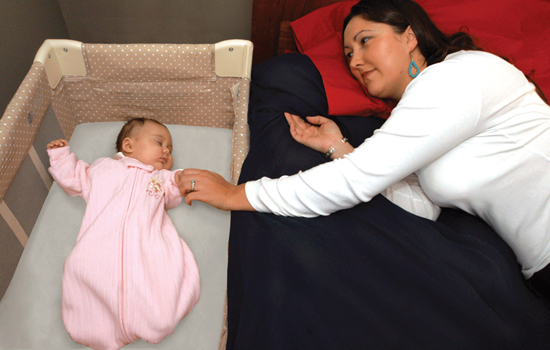
Co-sleeping, Bed-sharing, and Room Sharing

Co-sleeping, bed-sharing, and room-sharing are all common practices when it comes to infants and sleep arrangements. These terms are often used interchangeably, but they refer to different things. Co-sleeping generally refers to parents and babies sharing the same sleeping space, whether it be a bed or a room. Bed-sharing specifically involves the parent and child sharing the same bed or sleeping surface, while room-sharing means the child has their own separate sleeping space in the same room as the parent. The American Academy of Pediatrics (AAP) strongly advises against bed-sharing but strongly recommends room-sharing for the first year. While bed-sharing is a common practice in many cultures around the world, most Western beds are not set up for safe infant sleep. Click here to learn more about the risks of bed-sharing, and see these Parents.com articles to help make the process easier.


Back to Sleep…

One of the most effective actions that parents or caregivers can take to reduce the risk of SIDS is to always place baby on their back to sleep, for all naps and at night. Stomach sleeping increases the risk of overheating and breathing in exhaled air, while side sleeping is unstable and can cause baby to accidentally roll over on their stomach. Once your baby can roll from back to stomach and stomach to back on their own, you can leave them in the position they choose after starting sleep on their back. If they can only roll one way on their own, you should reposition them on their back if they roll onto their stomach during sleep. Visit What to Expect for advice on getting your baby to sleep on their back.

…Tummy to Play

Although tummy time does not directly reduce the risk of SIDS, it is an important way to help your baby grow and develop. Tummy time aids in the development of their head, neck, and shoulder muscles, which are crucial for achieving important milestones like holding their heads up, rolling over, and eventually crawling. Most babies can start tummy time sessions a day or two after they are born, starting with a few short sessions each day and increasing the amount of time as they get older. Tummy time also helps prevent flat spots on the head and provides opportunities for babies to explore and interact with the world in a new way. Pathways put together a comprehensive guide to tummy time and its benefits – visit them below!


Why do babies need a firm mattress?

Your baby’s crib mattress may seem too firm for you, but that’s how it’s supposed to be! Babies need a firm surface to sleep on to ensure their spines are properly supported and prevent them from sinking into the mattress, which may restrict their movement or breathing. Studies have shown that as many as one-third of babies who die from SIDS each year may have been sleeping on top of soft surfaces like pillows, comforters, or sheepskins. Softer surfaces also increase the risk of suffocation if the baby were to roll onto their stomach. Visit the National Institute of Child Health and Human Development for more information.

What about babies with reflux?

Parents may be concerned that their baby might vomit and choke while sleeping on their back, but that’s a total myth! Even babies with GERD or reflux are safer sleeping on their backs. Babies have a naturally occurring gag reflex that protects their airways and ensures that any solid or liquid substances are expelled to prevent choking. Back sleeping is safer because it puts the trachea on top of the esophagus, so if baby does spit up, it will run back into the stomach and not into the lungs. Crib wedges or elevating the head of the crib is unnecessary and may cause baby to slide to the foot of the crib and in an unsafe position. Visit Healthline for more tips for babies with reflux.


Safe Sleep for Babies Act

The Safe Sleep Act for Babies was signed into law by President Biden and aims to protect the well-being of infants and children by preventing unsafe sleep products and practices. It banned the sale of inclined sleepers and crib bumper pads, two dangerous products that have been linked to more than 200 infant deaths. You may not find these items new on Amazon, but you can still find them secondhand. Always be sure to check the Consumer Product Safety Commission website to see whether your baby’s crib was recalled. What to Expect put together a great guide to help you understand what the latest sleep guidelines actually mean – see more below!


Car Seats – Great for Road Trips, Not Naps

While a car seat is the safest place for your child in the car, it’s primary purpose is to keep children safe in a crash. That’s why most car seats are inclined, even though we know that lying flat is the safest way to sleep. Sleeping at an incline, like in a car seat or stroller, can cause the baby’s heavy head to fall forward into a chin-to-chest posture. This posture can block the baby’s airway, causing positional asphyxia. The scary part is that a baby sleeping peacefully and a baby experiencing positional asphyxia can look the same, even to the most watchful eye. If your baby falls asleep while you’re on the go, make sure to move them to a safe space as soon as possible. For longer trips, make sure you have a properly installed car seat and follow the 2-Hour Rule – no more than 2 hours in a car seat within a 24 hour time period. Visit our car seat safety website and view Safe in the Seat’s article below for more!


As an inaugural member of the Cribs for Kids Program Advisory Board, Sarah Vaughan contributes expertise alongside a diverse group of infant safe sleep specialists and advocates. Our role involves collaborating to create impactful educational resources and outreach strategies aimed at reducing infant mortality from unsafe sleep practices. Visit Cribs for Kids to learn more!


Stay informed – join our mailing list today!

Whether you are a parent, child care provider, or interested community member, we have a variety of valuable resources to share with you. Sign up today to receive updates on early childhood education in Virginia!

September is Baby Safety Month

September is Baby Safety Month

Baby Safety Month highlights the importance of providing babies and families with safe, quality environments. Making children’s safety a priority means protecting them where they live and protecting them from dangerous products. But, even with the best parenting instincts, caring for a new life that depends entirely on you is not an easy task. Babies keep parents and caregivers busy – see the resources below to help make your job less stressful and keep your tiny human safe!


Safe Sleep 101

Newborns should spend between 14 and 17 hours sleeping every day—make sure they’re as safe as possible! Unsafe sleep is Virginia’s leading cause of non-natural infant deaths, but we can reduce that risk. Remember the ABCs of Safe Sleep: The best place for your baby to sleep is ALONE, on their BACK, and in a CRIB with tight-fitting sheets and no soft objects or loose bedding. 

The Safe Sleep Academy was developed by Cribs for Kids to educate parents and caregivers on the importance of safe sleep practices. Their website is full of resources and information to help you maintain a safe home and sleep environment. Click the button below to visit Cribs for Kids, and make sure to check out their Safe Sleep Video Library!

Car Seat Safety

Car seats are critical to keeping your baby safe in a car. When installed correctly, car seats can reduce the risk of fatal injury in a crash by 71% for infants, but nearly half of all car seats and booster seats in the US are installed incorrectly! Find a Certified Child Passenger Safety Technician in your area for hands-on help installing your child safety seat, and click the link in the picture for a free Car Seat Safety course from the ICP. 

While car seats are always the best place for babies in a vehicle, remember that they are not safe sleeping spaces. Infants shouldn’t be left in car seats for more than half an hour at a time and should never nap in a car seat outside of a vehicle. Visit our website for more car safety tips.


Baby Proofing

Bringing home a baby can change how you view many things in your house. You probably did a round of babyproofing before you even brought your little one home, but as the baby gets closer to scooting and crawling, it’s time to take another look at the potential hazards in your home. Everyday items you haven’t given much thought to are exciting things for the baby to pull, push, gnaw, grab, or climb on. Accidents are the leading cause of death for young children, so working to keep them safe is important. Visit FamilyEducation.com to learn more babyproofing basics, or see some babyproofing steps you might have missed. For a room-by-room babyproofing checklist, click the link in the button!


Choosing Safe Toys

The right toys can provide so many benefits to your child, from stimulating their senses, supporting motor skills, and sparking delight. In general, most toys on the market today are safe, but injuries can happen when toys break, are misused, or are inappropriate for the age and temperament of the child. Even when well supervised, young children often find themselves in dangerous situations. To help keep them safe, select toys that offer worthwhile play and learning experiences while limiting hazards.  The best toys are the ones that meet a child’s age, development, skills, and interests. The way babies play changes as they age and grow, so it’s important to select toys designed that can help their development. Click the link for more.

Unsafe Baby Products

Baby walkers have been marketed as helping kids walk sooner, but research shows they may actually delay your child’s first steps and have been responsible for thousands of infant injuries. The AAP has even called for a ban on the sale and manufacture of walkers, but you can still see them for sale today. You may be surprised to learn that many well-known and well-loved baby products have led to many infant deaths. Even products that are safe to use during supervised awake time can lead to death or injury when misused, such as infant loungers leading to SIDS when infants sleep in them. Click the link in the button to see a list of baby products you should avoid and how some safe products can be misused. See also – 7 everyday objects your baby shouldn’t be playing with.


Drowning Prevention

When you think of drowning prevention, you may think of horror stories of children drowning in pools, beaches, or lakes. But according to the CDC, two-thirds of infant drownings happen in the bathtub. Drowning is often silent and can happen quickly, so it’s important to always supervise young children around any bodies of water, no matter how deep. For more water safety information, visit our friends at HealthyChildren.org.  


Juvenile Product Manufacturers Association

If you’re in the market for baby products, you’re likely to see the Juvenile Products Manufacturers Association (JPMA) seal on some of them. A JPMA certification seal means that a baby product has been tested and met guidelines set by an international agency and government requirements for safety and use. The JPMA sponsors Baby Safety Month annually to educate parents and caregivers on the safe selection and use of juvenile products. Visit the JPMA website to learn more about Baby Safety Month and more!

Juvenile Product Recalls

When a product is found to pose a risk of serious harm, it may be recalled by the government and the manufacturer. Most recalls of children’s products are handled by the CPSC. Keep in mind that even when a product is removed from stores, few steps are taken to remove the product from homes, child care facilities, secondhand stores, and garage sales. Millions of recalled products are still in use today – make sure your check your products at SaferProducts.gov or the CPSC Recall Search website. For more product safety information, check out the CPSC Safety Education Website below!


Choosing Quality Child Care

When it comes to keeping your baby safe, choosing a quality child care provider is one of the most important decisions you can make. High-quality child care has a long-lasting impact on a child’s development, behavior, and cognitive abilities. Visit our Families pages for more information about choosing a quality child care provider.


Stay informed – join our mailing list today!

Whether you are a parent, child care provider, or interested community member, we have a variety of valuable resources to share with you. Sign up today to receive updates on early childhood education in Virginia!

Don’t Be Scared. Be Prepared!

Although we wrapped up National Preparedness Month in September, we are still in the thick of hurricane season. As we prepare for cooler weather, it’s important to ensure your family has a plan in place for emergencies. Natural disasters can strike at any moment. Recently in Southern California, wildfires have been threatening many families, as others are battling hurricane season along the East Coast and Gulf of Mexico. Although emergency planning isn’t fun to think about, it’s important to know which types of disasters could affect your area and how you will respond.

Here are some tips that could help prepare your family in case of an emergency.

Put a plan together by discussing questions with your family, friends or household to start your emergency plan. How will I receive emergency alerts and warnings? What is my shelter plan? What is my evacuation route? What is my family/household communication plan? Do I need to update my emergency preparedness kit?

Allow your children to be involved in planning. Be sure they are included in your emergency preparedness conversations. Do they know where to meet the family if you all are separated? You can even build an emergency kit with your child and make it into a game. Go through different locations with your child to find what you need for an emergency kit. Have fun and build a checklist along the way.

Fill out a family emergency plan. Make a written family emergency plan and clearly communicate it to all family members to ensure everyone is on the same page in the event of an emergency. Download this family emergency plan and see if it will work for your family.

Communicate with your child care provider. Because a disaster can strike during school or work hours, you need to know their emergency response plans and how to stay informed. Discuss these plans with children, and let them know who could pick them up in an emergency. How will the provider contact you in case of an emergency? What is their emergency preparedness plan? Make sure you are signed up for alerts, warnings, and other texts from your child’s school and child care provider.

Practice, practice, practice. Be sure your family knows the plan you all have agreed on. Practice this a few times a year so no one forgets, especially before disasters occur like hurricane season. After you practice, talk about how it went. What worked well? What can be improved? What information, if any, needs to be updated? If you make updates, remember to print new copies of the plan for everyone.

Sesame Street has created an Emergency Preparedness Guide for families and videos for child care providers. The Institute of Childhood Preparedness also offers online trainings for child care providers to help improve centers and their response in the case of an emergency. They suggest finding easy ways to help children remember this vital information like songs, jingles or rhymes. No matter the strategy you choose, repetition is key. It can help to practice in the car and at bedtime. This will help ensure your child will be positively identified in case of an emergency or separation.

Please take a moment to review this important information, discuss it with your family, and make plans accordingly. In times like these, it is beneficial to hope for the best but prepare for the worst.

Resources:

Sesame Street Emergency Preparedness ToolKit

Handling Emergencies

Family Emergency Communication Plan

Child Care Aware of America- Emergency Preparedness

Emergency Preparedness for Providers

Virtual Learning 101

A new school year is approaching and many parents and teachers have to take an unconventional approach to educate children. Over the past few weeks, return to school has been the main source of stress, anxiety, and frustration for many parents. The community was not fully prepared for the drastic shift. Parents may feel overwhelmed and unprepared to transfer their child’s classroom into the home without the right tools, resources, or years of training as a teacher. THAT’S OKAY! Distance learning is new, for parents, teachers, and most students alike. With everyone trying to figure out how to make this work, keep in mind that virtual learning doesn’t have to be scary, and can actually have rewarding benefits.

While we’re trying to find a balance between self-discipline and self-care, maintain patience and remember the few things you can do to make life run a little smoother in your child’s virtual classroom.

Connect with your child’s teachers. Teachers have been trying their best to be available and make
this new norm as smooth as possible. Stay in touch with them and ask questions. Remember you’re the student too in all of this. Work together.

Set a schedule/routine that works for you, but also keep it flexible. Not only may this look unlike their traditional school day, but it may include getting school work done on weekends when parents have more time to help out. Communicate with teachers about what your family is going through and get creative with how best to use your time.

Give yourself grace. You don’t have to be perfect. This is new for all of us. Every approach will be different. If yours is different from someone else’s, it’s okay. It is most important that your approach works for your family!

Be realistic in goal setting. Everyone has a different situation. Some parents at home and able to assist, some are essential staff working overtime, and some are able to work from home. Create weekly goals for your child that takes your family and circumstances into account.

Create a Community Pod. Have friends who are all dealing with the same unfamiliar virtual learning life? Schedule Zoom time with other families to give kids a chance to socialize, play, and chat with one another. This can be designated time throughout the day that they kids can look forward to while you catch up on work and return an email or two.

Just remember, you’re not alone. Remote learning has presented parents with many new challenges. Many families are still adapting and adjusting to new responsibilities, like teaching. However, circumstances have provided new opportunities to improve parental involvement and create new memories for your children in the future.

Additional Resources:

Virtual Learning Tips for Parents

For the First Time Homeschooling Parent/Teacher

Balancing Work and Homeschooling

Summer Science Sparks

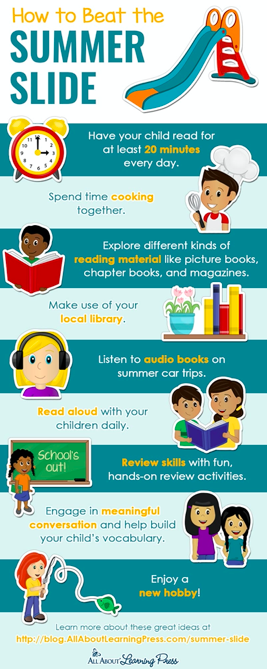
While summer is typically associated with learning loss, we challenge you to make this is summer full of fun opportunities to keep the gears turning during the summer break. School is out, but the learning continues!

The “summer slide” is a term that refers to a decline in reading ability and other academic skills that can occur over the summer months when school is not in session. This can create a delay during the first 2 months of school since teachers have to reteach previous information to help kids get back on track. It is important that we keep our children’s academic skills polished when school is out, so they return to school ready to build on their skills and knowledge instead of playing catch up. COVID-19 has changed how we go about our daily lives—especially when it comes to how our children learn. With widespread school closings, students and families are challenged to continue learning in a very different environment. However, parents and educators are still finding creative and innovative ways to help students stay on track.

Although we may not be able to travel as much this summer, we can still make the best of the time we have at home and make learning fun. Summer break provides the perfect environment to get outside, enjoy the fresh air, reconnect with your family and have fun in the comfort of your own home! Whether you’re prepping your little one to transition to the next grade level or just trying to find things to occupy their busy minds, these science experiments are easy, inexpensive and a lot of fun for kids of all ages. Who knows, you may end up learning something too!

Tornado in a bottle– With only a few simple supplies, you can create your own tornado in a bottle. Add glitter, food dye, or lamp oil to the bottle to make your weather lesson even more exciting!

Gooey slime– Your child will truly feel like a scientist with this experiment. Mix glue, water, food coloring, and borax, to create a gooey slime!

Rainbow in a cup– This experiment takes advantage of density to create a rainbow in a cup. An interesting science experiment using supplies you probably already have in your home!

Become nature experts during your next family walk. Check out the leaves from different trees around your neighborhood or even hunt for bugs!

Cooking is science too! Get your little one involved with preparing dinner. We’ve talked about the importance of family meal time and a balanced diet, but meal time also provides an opportunity for learning to take place.

Children are naturally curious and eager to discover the world. You can continue igniting their creative minds with hands-on science experiments that are sure to blow their young minds. These simple science experiments are parent, teacher, and kid approved for your future scientists.

Additional Resources:

23 Science Experiments to try at Home

Science Fun

Importance of Summer Learning

Summer Learning Resources for Parents

Look Before You Lock! Prevent Hot Car Deaths

Each summer we see heartbreaking headlines about children being left unattended in hot vehicles.  According to Kids and Cars, over 940 children have died in hot cars nationwide since 1990, and in 2018 alone, a record 52 children died from heat-related deaths. These tragedies can happen to even the most loving, caring and responsible families.

Summer is just around the corner and the weather is warming up. Child Care Aware of Virginia encourages all caregivers to never leave a child in a vehicle unattended, look in the back seat every time you leave your car, always lock your car, and keep your keys out of children’s reach.

Parents are busy and we know you are juggling a lot. How many mornings have you left your house and in a forgetful moment, think “Did I close the garage? Did I turn off the coffee pot? Did I remember to lock the front door?”  How often has your usual morning routine been rerouted for one of a hundred different reasons?
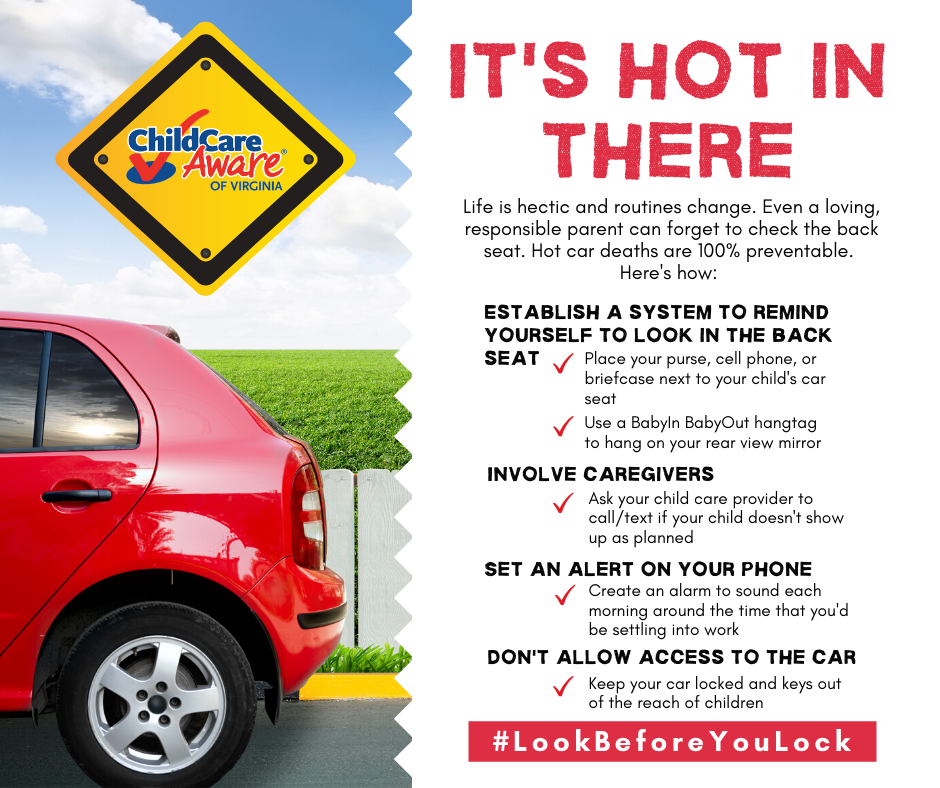

These little changes in your routine may be the very things that can cause you to forget your precious cargo in the backseat.  Loving, responsible parents can be overwhelmed and forget to look in the backseat. With our children’s lives on the line, we can’t afford to be distracted during our daily routines. Here are a few basic tips to help you stay alert and establish a routine to keep children safe while in your vehicle.

  • Establish a system to remind yourself that your child is in the car. Try placing a briefcase, purse, or cell phone next to the child’s car seat; that way you will always check the back seat before you leave your car. Order a BabyInBabyOut hangtag for your rear view mirror to remind you to #LookBeforeYouLock.
  • Involve caregivers. Ask your child care provider to send you a text or give you a call if your child does not show up as planned.
  • Set an alert on your phone. Create an alarm to sound each morning around the time you drop off your child or would be settling into work. When the alarm sounds, go through a mental checklist to be sure your child is safe.
  • Don’t allow access to the car. Keep your keys out of reach and your car doors locked. We all know that little ones like to explore. Taking away access to the car eliminates the possibility of them crawling into the hot car and getting trapped.

Bystanders should know that Virginia has a “Good Samaritan” law to protect themselves from lawsuits for helping a person in an emergency. If you are a bystander and see a child alone in a hot vehicle, call 911 immediately and, if necessary, safely do what is needed to rescue the child.  It takes a village to raise a child, and we are counting on the entire community to keep them safe.

Additional Resources

Hot Cars and Child Safety

Look Before You Lock

BabyIn BabyOut

Trauma and Behavior: What You Need to Know

Children feel stress just like we do. They may experience stress from school, learning how to ride a bike by themselves, an upcoming performance, or traumatic events like natural disasters, being abused, neglected, or bullied. These events can overwhelm the child’s natural response to cope. Children may not recognize their anxiety and it may be hard to explain what they are feeling.  Signs of stress and anxiety in children often show up as changes in physical appearance or behavior. Remember, behavior has meaning and these changes just may be a signal for help.

Children who have experienced traumatic events need to feel safe. All parents want to provide a safe and loving home for their children. However, when parents do not have an understanding of the effects of trauma, they may see child as “acting out” and end up feeling frustrated themselves. By increasing your understanding of trauma, you can help support your child’s healing, your relationship with him or her, and your family as a whole. So how can you tell the difference between misbehavior and stress behavior?

What can trauma behavior look like?

This can be different for every child depending on age, developmental level, and the impact of the event. Your child may not react in the way you expect and others may not react until months later. Common reactions may include:

Withdrawal – such as loss of interest in activities, loss of confidence, and developmental regression

Preoccupation – needing to relive the experience, for example, through repetitive play or drawings, or nightmares

Anxiety – such as problems with concentrating or paying attention, attachment issues separation anxiety, sleep problems and irritable or self-destructive behaviors

Physical symptoms – such as headaches and stomach aches

How can I support my child during this time?

In the wake of a traumatic event, your comfort, support and reassurance can make children feel safe, help them manage their fears, guide them through their grief, and help them recover in a healthy way.

Here are some tips from the Children’s Bureau website:

  • Identify trauma triggers
  • Be physically and emotionally available
  • Allow some control
  • Listen
  • Respond, don’t react
  • Don’t take behavior personally. Your child isn’t “bad” or behaving this way on purpose.
  • Read a book that may be similar to your child’s situation

When you are able to relax and discover the REAL source of your child’s behavior, it can create an immediate shift in how you think about, influence, and relate to your child. Your anger and frustration can turn into compassion, empathy, and confidence in an instant—and that’s what makes the difference.


Additional Resources:

How Trauma Affects Children in School

About Child Trauma

Signs of Trauma in Children